Home › Things to do
Things to do in St Lucia
A small town on the estuary of Lake St Lucia, surrounded by the iSimangaliso Wetland Park, where hippos graze on the lawns at night and the beach, lake and bush are all minutes apart.
Take an estuary boat cruise
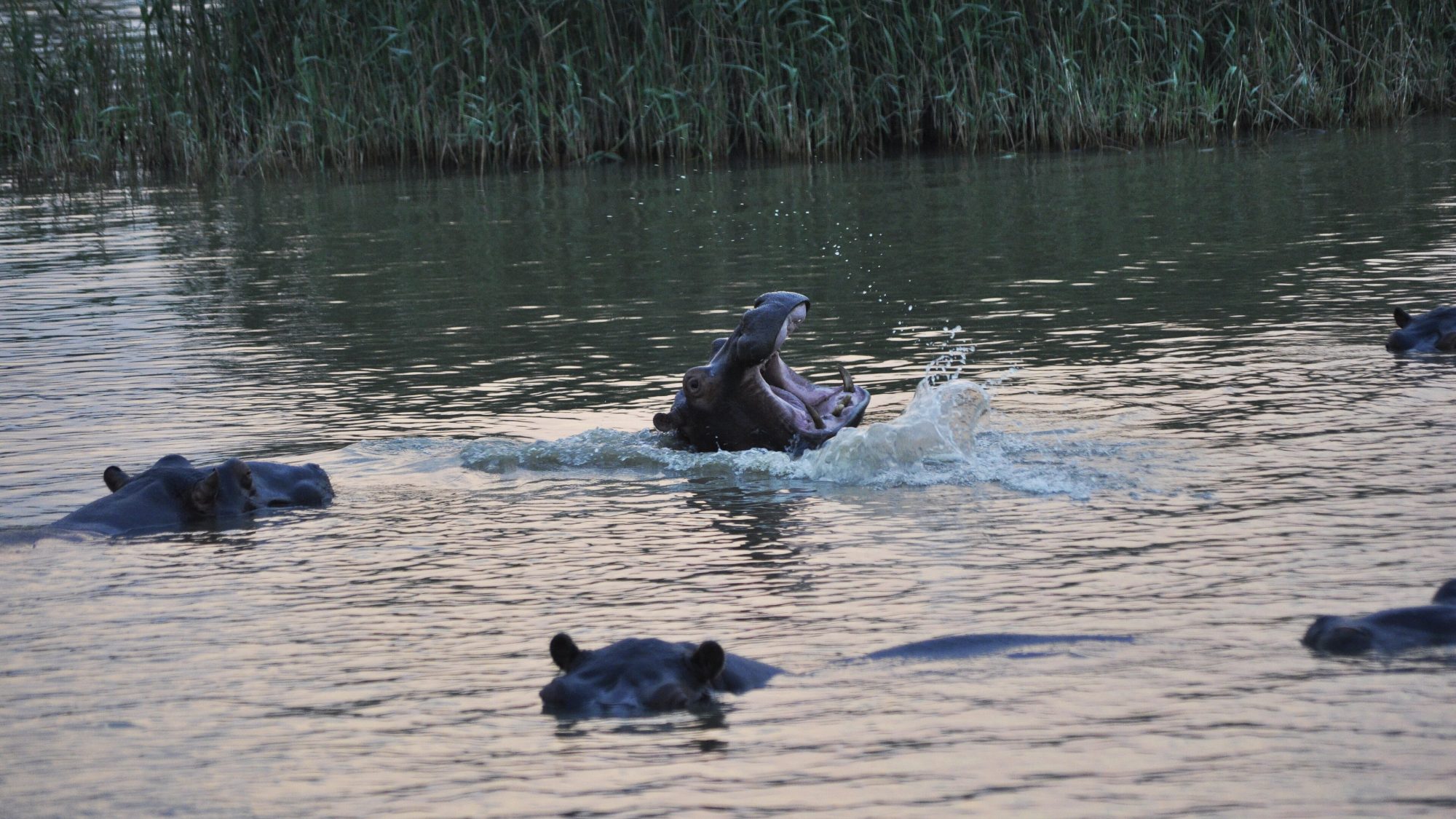
The easiest way to see hippos and crocodiles up close is from the water. Several operators run cruises up the St Lucia estuary every day, with good views of hippo pods, Nile crocodiles on the banks and plenty of water birds such as fish eagles, kingfishers, herons and pelicans.
Sunset cruises are popular, so book ahead in school holidays.
Watch out for hippos in town
St Lucia is one of the few towns where hippos walk the streets. They come out of the estuary at night to graze on lawns and verges. Drive slowly after dark, never walk between a hippo and the water, and give them plenty of space: they are big, fast and dangerous.
Cape Vidal and the Eastern Shores
North of town, the Eastern Shores section of the iSimangaliso Wetland Park runs between the lake and the sea to Cape Vidal. The drive passes grassland, wetlands and coastal forest where you can see antelope, zebra and buffalo, with lookout points and loops along the way.
At Cape Vidal a reef shelters a sandy bay that is good for swimming and snorkelling in calm conditions. An entry fee is payable, the gates open and close at set times, and day visitor numbers can be limited in busy periods, so go early.
Mission Rocks
On the way to Cape Vidal, a turn-off leads to Mission Rocks, a rocky shore with rock pools full of fish, crabs and anemones at low tide. Check the tide times before you go, and take care on the slippery rocks.
Whale watching and turtle tours
Humpback whales pass the coast on their migration from about June to November, and licensed operators run boat-based whale watching trips from St Lucia in season.
From about November to February, loggerhead and leatherback turtles come ashore to nest on the beaches of iSimangaliso. Licensed operators run guided night turtle tours in season. Never approach nesting turtles on your own.
Hluhluwe-iMfolozi Park
About an hour’s drive inland, Hluhluwe-iMfolozi Park is one of Africa’s oldest proclaimed game reserves and is famous for its role in saving the white rhino. It is home to the Big Five, and many St Lucia operators run full-day and half-day safaris there.
Walks, birding and the crocodile centre
The Igwalagwala Trail is a short forest walk in town, and the estuary boardwalk leads to the beach. iSimangaliso is one of the best birding areas in South Africa, with hundreds of species recorded. The St Lucia Crocodile Centre, at the entrance to the Eastern Shores, is a good place to learn about Nile crocodiles and other reptiles. See our St Lucia wildlife guide.
Fishing
St Lucia is popular for surf and ski-boat fishing. Carry a valid recreational fishing permit, keep to bag and size limits and the park’s rules, and never fish or wade in the estuary, where crocodiles and hippos live.
Listed on Explore St Lucia
- Kids Love Reading – story and activity books for ages 7–10, good for holidays
Run a business here? List it for free as one of our founding businesses.
Questions people ask
Can you swim at St Lucia?
Never swim in the estuary or the lake: they are home to crocodiles and hippos. The sea off the main beach can have strong currents, so swim only where it is safe and supervised. Cape Vidal’s reef-sheltered bay is a popular swimming spot in calm conditions.
Do hippos really walk through St Lucia?
Yes. Hippos leave the estuary at night to graze in town. Drive slowly after dark, keep your distance and never get between a hippo and the water.
How far is St Lucia from Durban?
About two and a half to three hours by car. Take the N2 north and turn off at Mtubatuba onto the R618 to St Lucia.
How far is Hluhluwe-iMfolozi Park from St Lucia?
About an hour’s drive, which makes it an easy day trip. Many St Lucia tour operators run guided safaris there.