Home › Wildlife
St Lucia Wildlife & Conservation
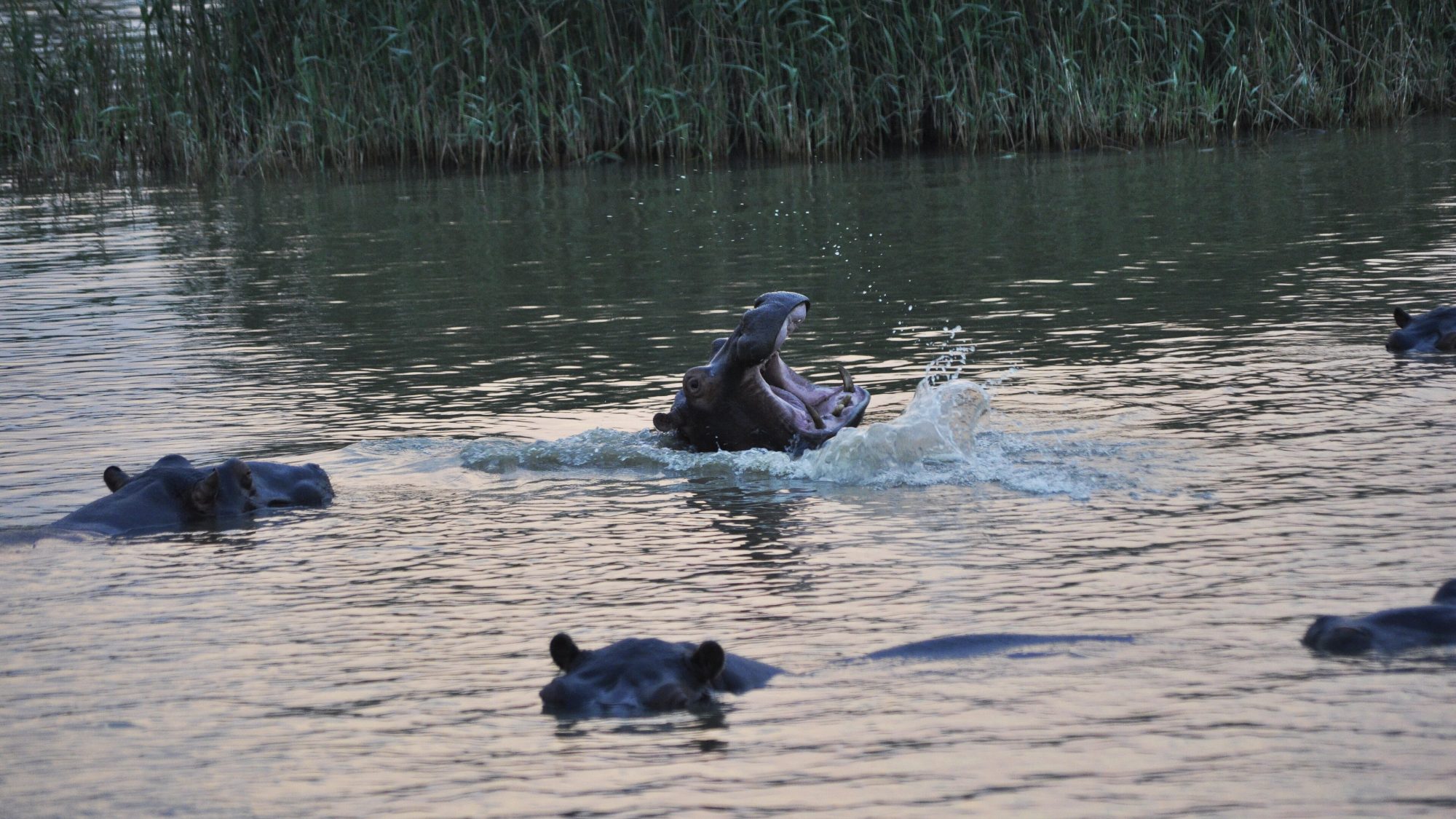
Hippos in the estuary, crocodiles on the banks, fish eagles overhead and red duiker in the forest: St Lucia sits in the middle of the iSimangaliso Wetland Park, and wild animals share the town with its people.
Species with confirmed (research grade) sightings within about 6 km of St Lucia town on iNaturalist, the citizen science app. Introduced species and pets are left out.
Animals to look out for
A few of the species people have recorded in and around St Lucia, and where you’re most likely to find them.
Five habitats in one place
The estuary & lake
Hippos and Nile crocodiles live in the estuary, with fish eagles, Goliath herons, kingfishers and pelicans feeding along the water. See them safely from a boat cruise.
Beach & surf
White-fronted plovers and crested terns work the shore and grey-hooded gulls gather near the river mouth. Humpback whales pass from about June to November.
Coastal forest
The forest around town shelters red duiker, bushbuck, crested guineafowl, trumpeter hornbills, turacos and many forest butterflies.
Grassland & wetlands
On the Eastern Shores, grassland and wetlands hold zebra, kudu, waterbuck, buffalo and warthog, with plenty of frogs after summer rain.
Gardens & town
Vervet monkeys, banded mongooses, red bush squirrels and Nile monitors are common, and hippos graze on the lawns at night.
Threatened species recorded here
Species on this checklist that carry a conservation status. Every sighting helps scientists track them.
The full checklist
Every species recorded within about 6 km of St Lucia town, with the number of confirmed sightings. Search by name or pick a group.
How you can help
Small things make a real difference on a stretch of coast this busy with life.
- Give hippos space. They graze in town at night. Drive slowly after dark and never walk between a hippo and the water.
- Never swim or wade in the estuary. Crocodiles and hippos live there.
- Don’t feed monkeys or other animals. Fed animals become bold and are often hurt or removed.
- Keep food packed away when camping. Monkeys and other animals raid open tents and bins.
- Stay on paths and boardwalks. Dune and wetland plants hold the coast together and shelter frogs and birds.
- Fish within the rules. Carry a valid recreational fishing permit and follow the park’s rules and bag limits.
- Take your litter and fishing line home. Line and hooks tangle birds, crocodiles and fish.
- Share your sightings. Photograph wildlife and upload it to iNaturalist. Your records help build this list.